Tuesday, September 6, 2011

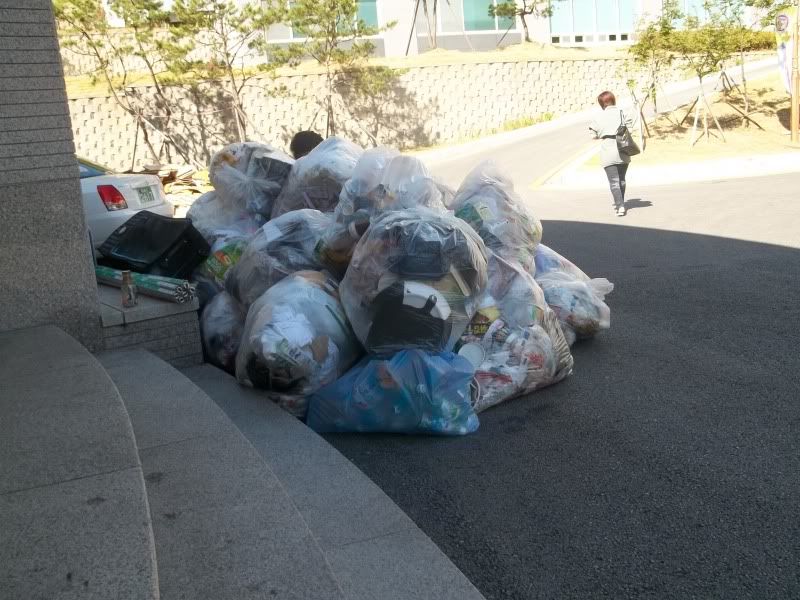
Above is a pretty striking example of a cultural or at least organizational difference between Korea and America. I first noticed it while exploring the part of Asan closest to our campus, trying to find what sort of shops and dining establishments were close by. As I did so there were two or three incidences of multiple piles of filled garbage bags out on the street. Just sitting there. At first glance it seemed pretty unsanitary - and this in a place where the plumbing can't handle toilet paper going through the pipes.

Then I stopped and thought, ultimately coming to understand that it's not a bad thing just because of how different it is from what I see in the States. Later I was able to see why these little mountains of trash were just left out on the street like that. A garbage truck came by later in the day, and when I checked outside the dorm afterwards, all the trash was gone. What I'd thought was just maybe poor santiation was actually a convenient way for places with lots of trash to leave it all out for disposal pickup. There aren't nearly as many garbage cans on campus as you might find at an American school, and Korea has a pretty thorough recycling program from what I've heard. So the moral of this observation was that things are different, not worse. I'd thought I knew better than that, but it took garbage to show me otherwise.


When I first arrived on campus, I'd already seen a lot of new buildings going up all along the way from Incheon airport. There's even a parking structure/apartment building still under construction next to our campus. These are all signs of the rapid rebuilding the country has undergone since the devastation of the Korean War. As Judith Sachs, one of our coordinators put it, "They've come from the devastation of that war in 60 years to become the 12th largest economy in the world. It's really a miracle." In so many places I look now, I see this resurgence still going on in all the apartment buildings that are being built. Even in Myeongdong, a center for fashion and discount (often, seemingly, illegal) name brand goods, there was a building undergoing rennovation.


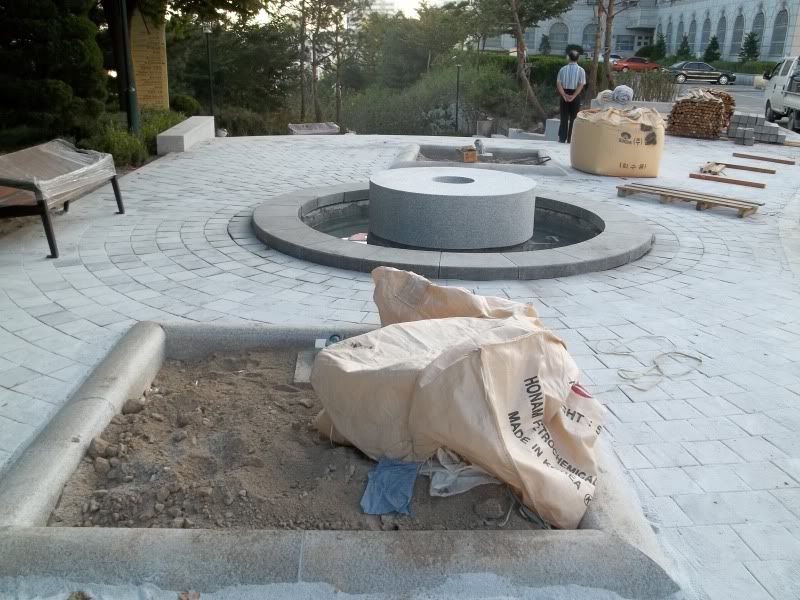
On the SoonChunHyang Campus, this drive for construction has been most visible in a long flight of stairs that were under construction when we arrived. You can see the the fountain at their top, still under construction itself, above. They were, I assume, built to grant an alternative to the narrow wooden plank staircase that's the only other way down in that part of the campus. All throughout the day there were a couple of people working on it, but I was sure it'd take a little while longer to complete. Therefore I was astonished to find they'd been completed, including the fountain, within just 3 days of arriving on campus. While they were certainly under construction longer than those 3 days, it was still an impressive feat all the same. Similarly, buildings that are under construction seem to be completed at a more rapid rate than would be seen in America.


Something that I'm starting to find out while abroad is that you have to just give in to whims of inspiration sometimes. It'll start just as something little you notice or read about. The more you think about it the more you want to go and see it, find out what it's really like rather than just seeing the pictures. The only way to really satisfy your mind afterwards is to make the effort to go and see what it is that caught your attention in person.
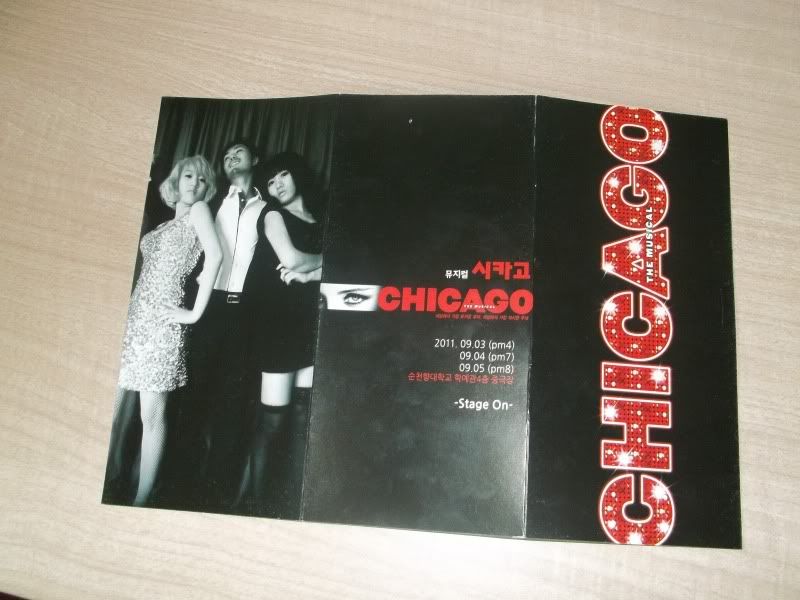

This was the case when I noticed flyers posted around the SCH campus for a production of Chicago. Mildly curious at first, the more I thought about it, the more I really wanted to see the show. Korea as I understand it has been a fairly conservative culture, based on the foundations of Confucianism and its emphasis on filial piety. So a show in which the chorus girls are dressed in the manner of flappers and dancers seemed like an intriguing choice of material.


As for the show itself, I found it to be well directed and acted. Even though I couldn't understand most of what was being said or sung, the hard work put in to the production was obvious. The cast performed with much energy and charisma, especially the leads, and it was a lot of fun to watch. Despite only having been here one week, I think this will be one of the better memories of my time in Korea. Something both familiar and alien - an American play performed in Korean - was someting I'd never imagined finding here. Yet when I did, it was that random inspiration that drove me to investigate further, and ultimately get quite a bit of enjoyment out of it.

Saturday, September 3, 2011

At SCH and in Seoul

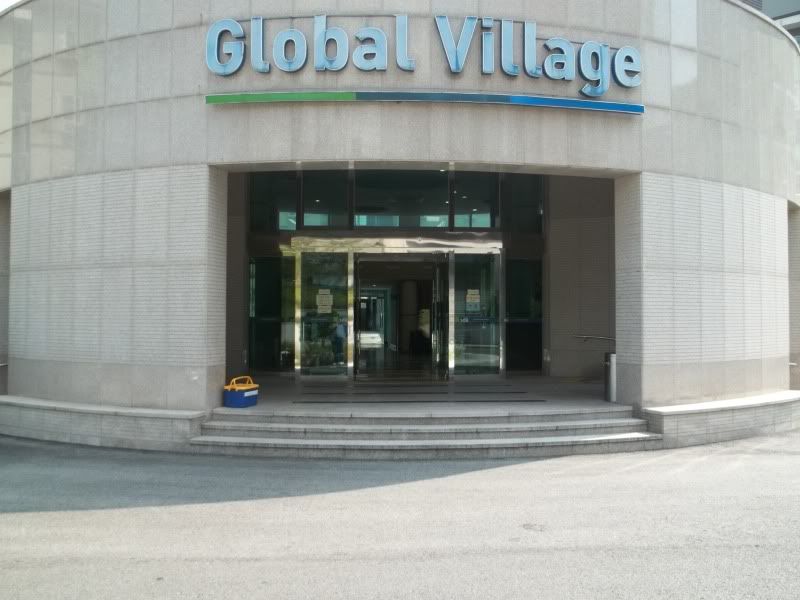
SCH's Global Village, where my dorm suite is located.


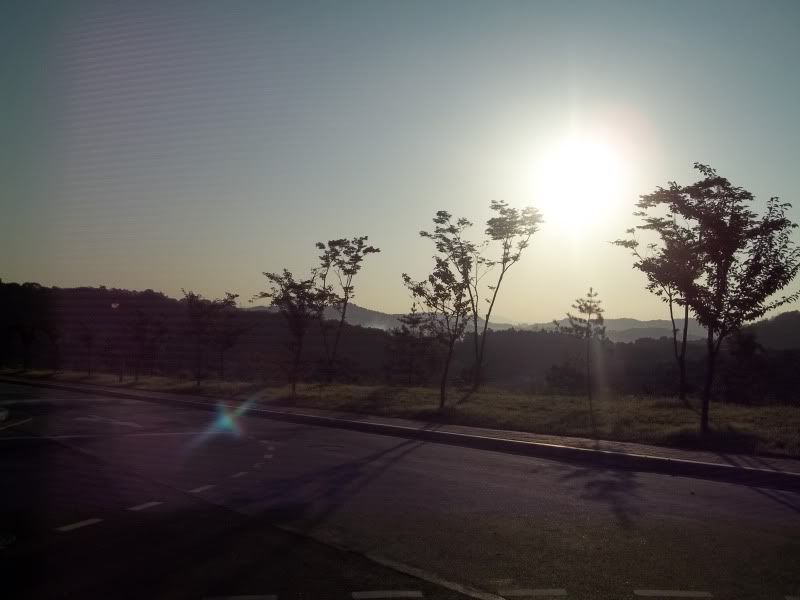
Misty hills and the countryside near SoonChunHyang University's campus in the morning.


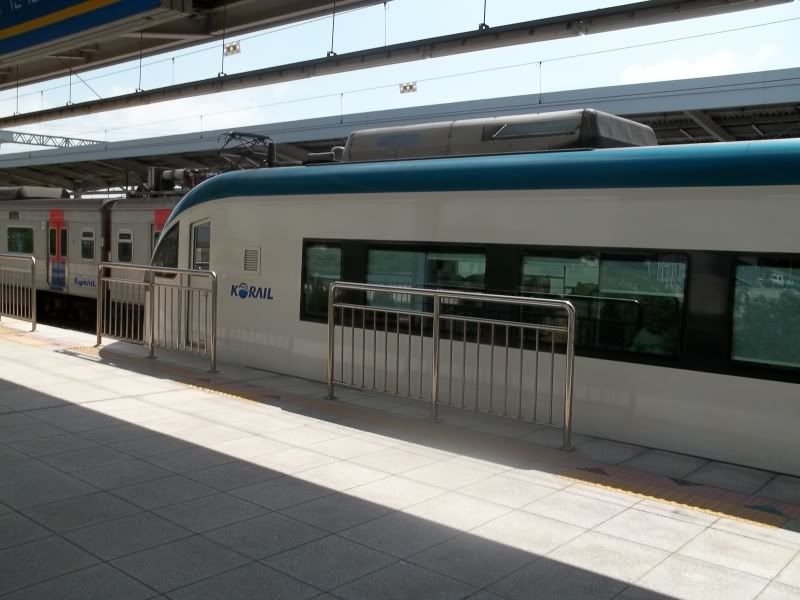
The Nuriro train, more comfortable and slightly faster than the regular trains that depart from Shinchang Station.


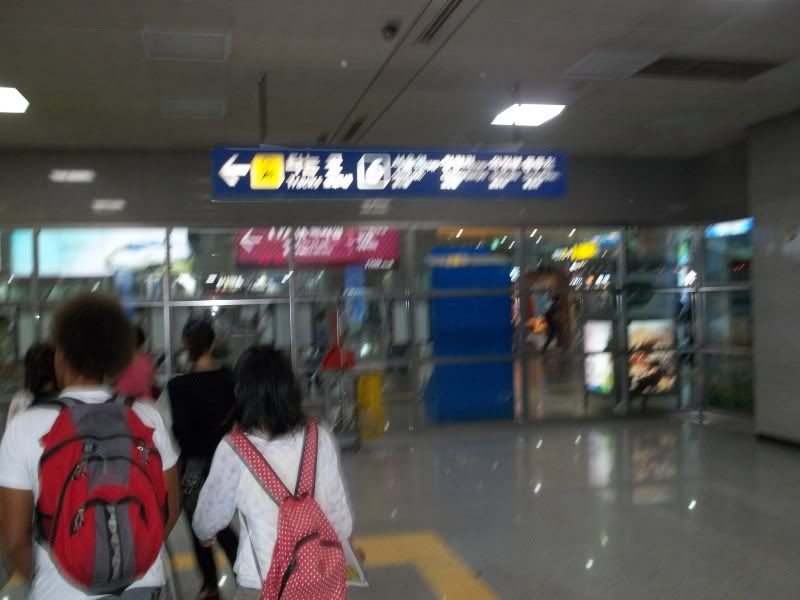
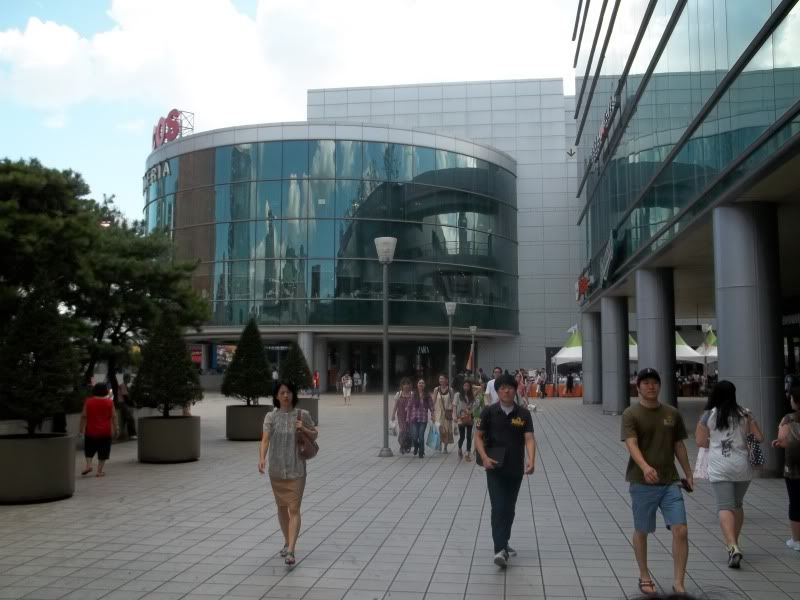
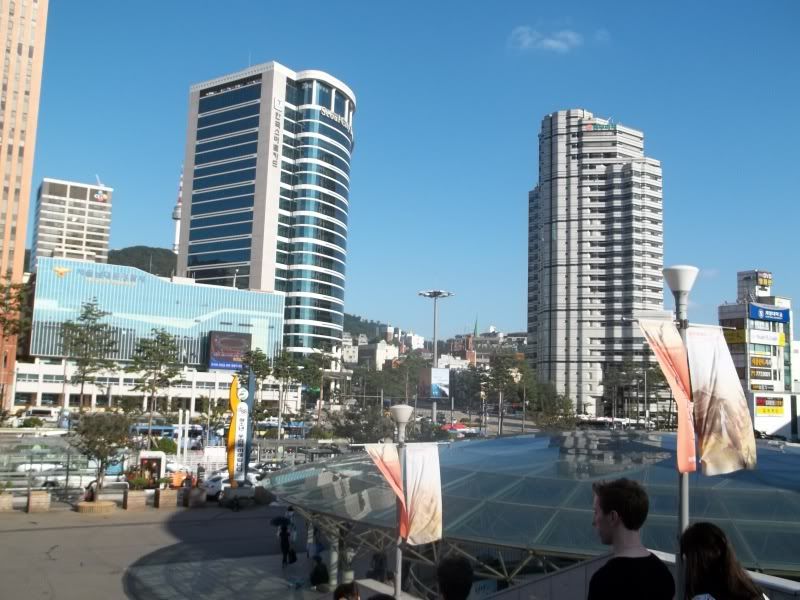
In and around Seoul Station.


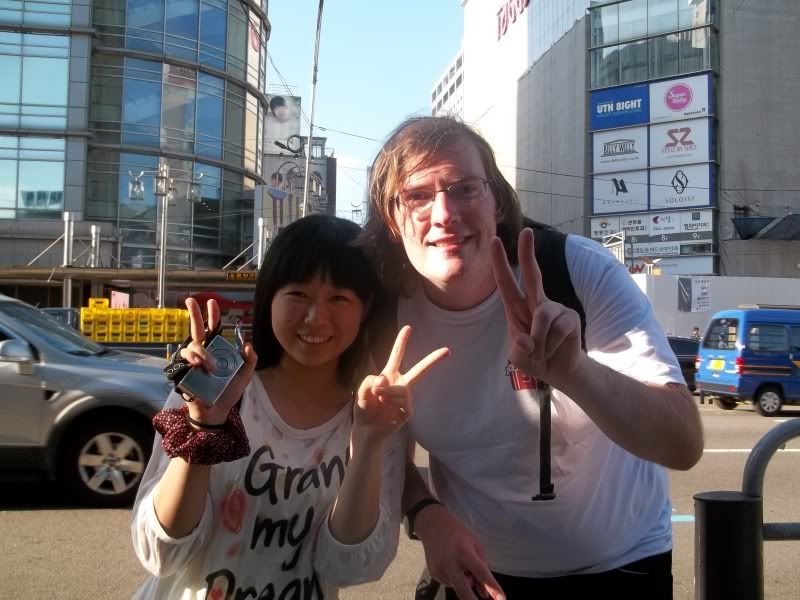
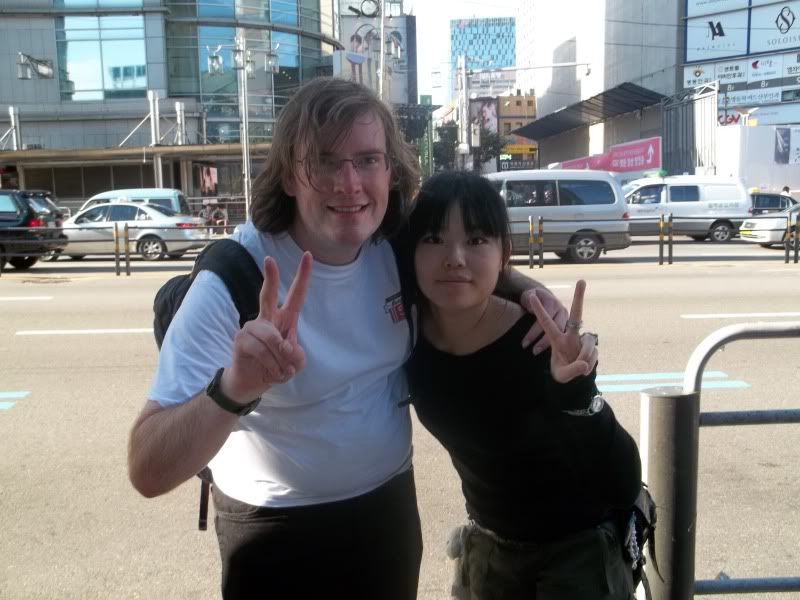
Stopping for pictures with Momoko (above) and Saki in Seoul.


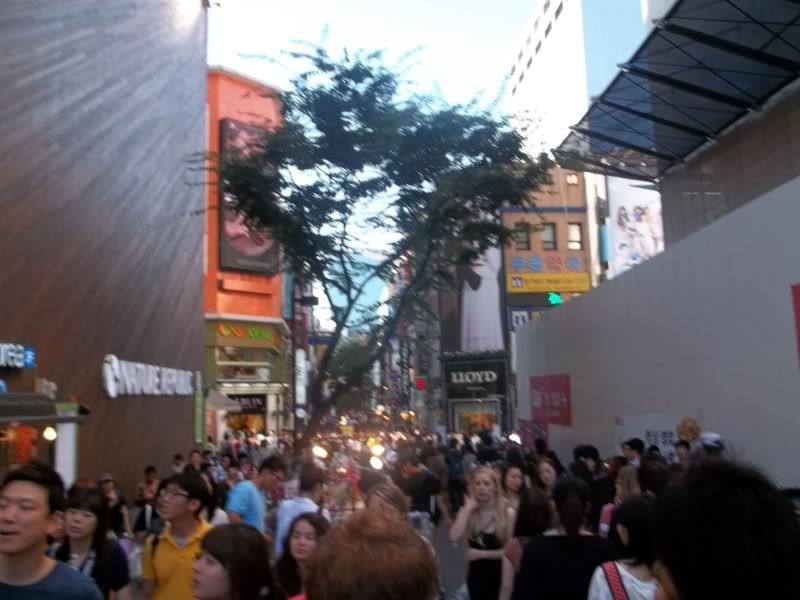
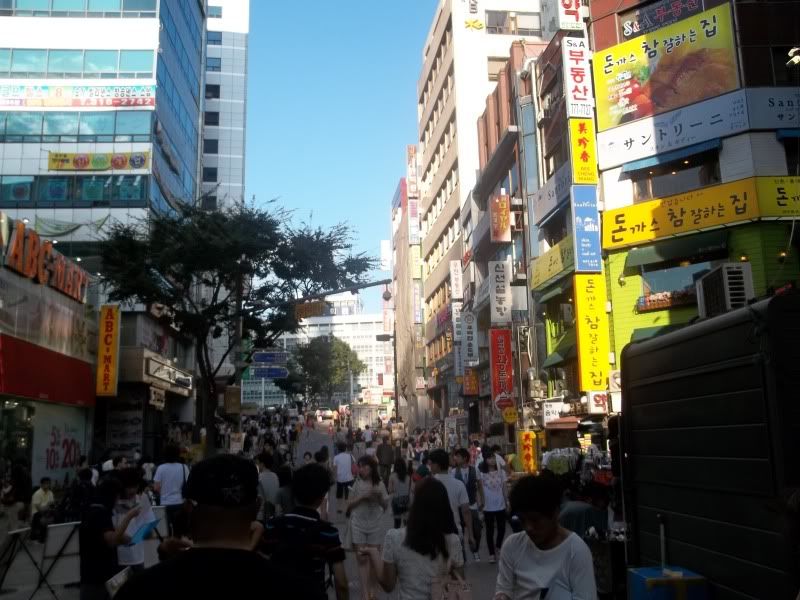
Various pics of Myungdong, taken as we progressed through the shopping area.


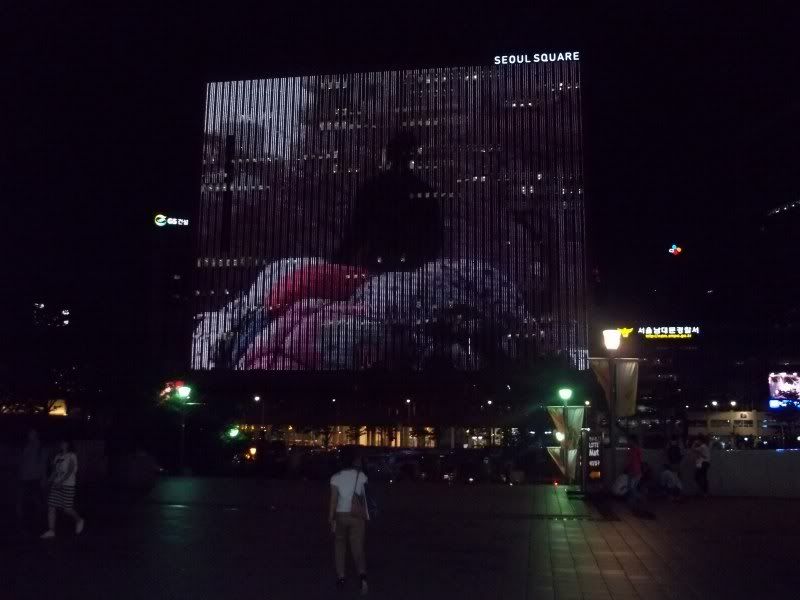
One of the last things we saw before going back to the subway: a building with video broadcast onto it.

It's occured to me that I should include more of my own personal reflections in my blog entries. Hopefully I will start doing that a little more. Since I'm no longer able to update my YouTube account for video blogs - until I can get an uploading issue resolved - I'll be using my text blog solely to record my experiences. Now, on to my thoughts.

Wow, it's been almost a full week since I left home for South Korea! It's hard to believe that I've actually arrived and that classes begin tomorrow. Just a few months ago this all seemed like it was all pretty vague and nebulous. Yet here I am sitting in my dorm room at SoonChunHyang University typing this blog entry. It can get kind of hard to wrap my head around that.

This first week's been up and down for me. After arriving and ever since I have had bouts of serious homesickness already - a side effect, I guess, of having lived with family up 'till this point. There's times that I in all seriousness almost cry because I miss my family, and feel a bit alone. Then there come times where I turn around and join in with a group of fellow internationals in a day trip on the subway or the like. It'll get better, I'm sure, now that classes are set to begin tomorrow and we're to get the rest of our Korean suitemates moving in today or tommorrow.

At SCH, foreigners in the International Studies (formerly Asian Studies) program live in dorms with suite arrangements. This means 12 people total in a suite, 2 to a bedroom. Of the 12, only 2 are foreigners and the rest are Koreans. It's honestly one of the reasons that SoonChunHyang was attractive to me in the first place - the interaction with Korean students, sharing our cultures and languages as well as experiences. Until a couple days ago it was just me and my American suitemate. Now there's at least four Koreans who've moved their things in - apparently they mostly go home for the weekends during the academic year. It will be interesting to meet all of them, and during the week, to go out with them for an icebreaker. From what I've heard there may be a noraebang (karaoke room/bar) involved. Could be fun times!

Even though I've only been here a week, I've already taken the subway twice to go see larger cities. SCH is located in Asan, but around the bend from what I think is downtown Asan. The area's largely rural, though our university neighborhood is chock full of convenience stores, restaurants and bars. Maybe not that dissimilar to what you'd see in the States. Just places for the young people who attend school here to go enjoy themselves or get a cheap/quick bite or drink.

Like I said, though, I've been to two bigger cities via the really convenient subway system. It's about a 20 minute walk from the Global Village where I'm staying to the pretty recent Shinchang Station. Once you buy a T-Money card, you just charge it and head out to the platform and await your train. It was by this method that I travelled to the nearest major city, Cheonan, last Tuesday and then to Seoul yesterday. The latter was kind of an abrupt event, but getting the sudden invitation was something I couldn't turn down. I mean, I flew into Seoul Incheon Airport, but I came straight to SCH from there.

Cheonan is, of course, a lot busier than Asan where the university is located. There are stores everywhere, and a number of street vendors for everything from sunglasses to concessions. Side streets also boast a variety of shops, and they all look kind of crammed together. If you're of mind to try the street fare for food, egg bread's not a bad way to go. It's a soft, chewy little bread with, off course, egg cooked in its center. This proved both cheap and tasty.

While I went to Cheonan with my suitemate, a returning international student, as a tour guide I went to Seoul at the invitation of another group of foreign students. It seems kind of oddly fitting that I've spent a lot of time the first few days with the Japanese students here. Having taken Japanese in middle/high school and college, it's been a great opportunity to see how much of the language I remember. This in addition to practicing my Korean!

They're only here a month, so they wanted to go shop in Seoul. Things got kind of bumpy when we got on the regular subway while their coordinator was on the more comfortable and train-like Nuriro. Then we ended up being on a subway route that went on an express route to Yongsam, a stop short of our intended destination of Seoul Station. After a transfer to the regular train we finally got to Seoul Station.. during which we were crammed into the car so tightly there wasn't room to move at all for the most part. So those stories you hear about packed subway cars in Seoul? Absolutely true. Getting off wasn't really all that hard though. And thankfully the Japanese students' coordinator was waiting at Seoul Station, along with one of the students' friends who lives in Seoul.

I liken Seoul to being sort of like Cheonan times a thousand. Seas of people, bright neon lights at night and shops, street vendors and other establishments all smack next to each other. We ended up at Myungdong, a major shopping area with a mix of brand names, brand name products that were of dubious authenticity, and street vendors right in the middle of the walkways. Currency exchanges dotted the area as well, and the whole effect was a little dizzying. Having never been to a place with so many people, it was really a sight to behold. This, to me, was a reflection of a modern Korea - dynamic, always moving.

To have so many stores in such a comparatively small area was also surprising to me. Even the restaurant we stopped in for dinner was fairly narrow, requiring us to climb two flights of stairs (after standing in line on the first) to reach our table. Really an experience. Thankfully we were able to catch the Nuriro train back to Shinchang Station at 8:53 pm, even though we had to stand most of the way back. You have to pay extra for an assigned seat, I think. We ended up back at the Global Village around 11 pm, an hour to spare before the midnight curfew. I was able to go to bed tired but satisfied that I'd not only gotten to go out and have fun with new acquiantances, but that I'd seen a heck of a lot in less than a week already.

An experience on the way back was worth noting too: an older Korean gentleman who spoke to us through an impromptu translator. He told us how the train worked (i.e. that our ticket meant we had to stand) and also seemed very excited to talk to foreigners. As he put it, "Koreans get very emotional when they talk to foreigners". We also learned he was an avid walker, and even had a business card in Japanese for one of the organizations he belonged to. It's this sort of interaction that I hope can make my stay here ever more fulfilling.

Thursday, September 1, 2011

Picture Supplement 2


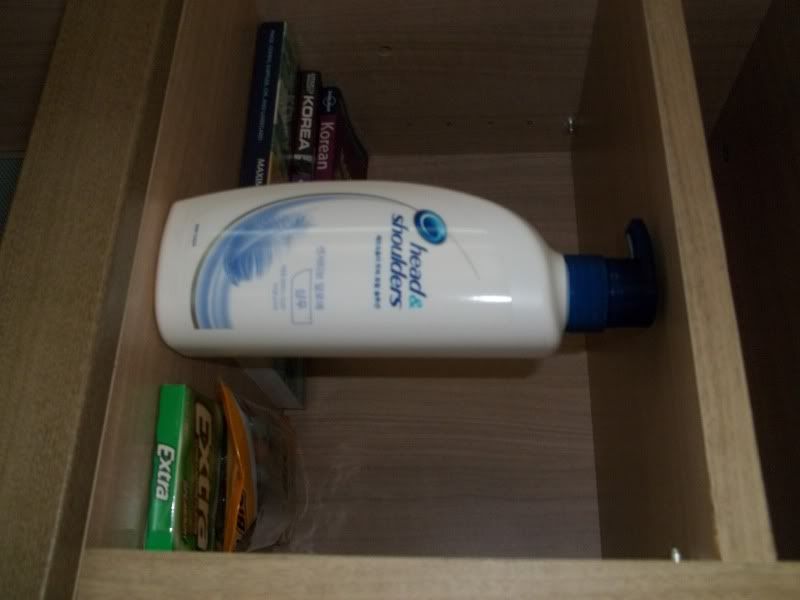
A bottle of shampoo in Korea cost 9,900 won (approx. US $9.90). I suggest bringing some from home if possible.


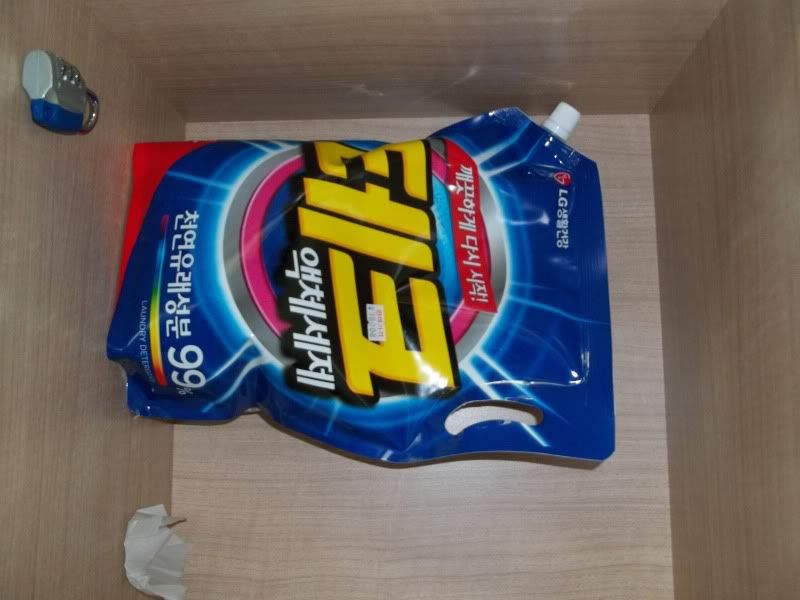
My laundry detergent which cost 7,800 won (approx. US $7.80). There are ways to get it cheaper, such as getting a discount card from a store like HomePlus.


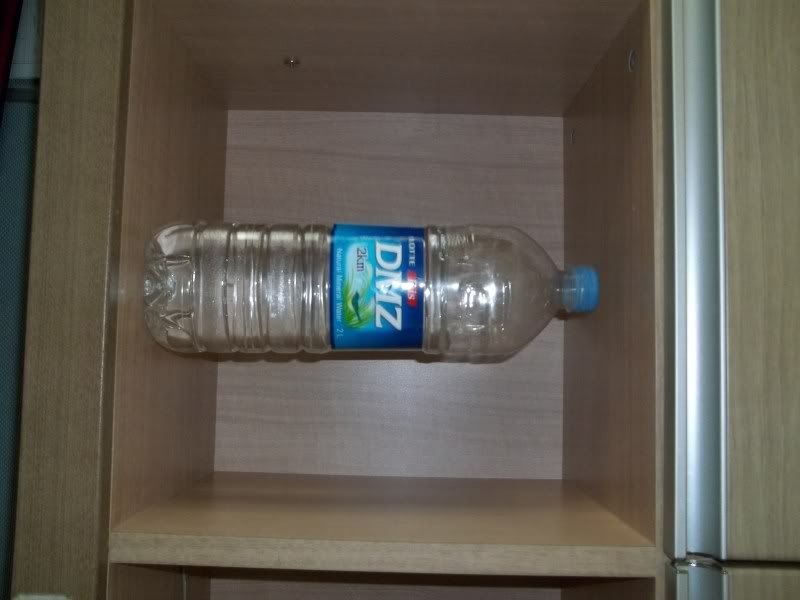
Despite being a little oddly named to a foreigner, this bottle of water was a wise investement. Only cost 880 won, which is under 90 cents US! Once you refill it a few times, that change goes even farther. Highly reccomend doing this.


In-Korea Tips, Week 1

After careful consideration, I've elected to use my second text blog update of each week to provide advice for those considering coming to Korea. This is mostly for those who, like me, plan to be in the country for an extended period of time. So each week I'll bring you one post about cultural, historical and personal experiences here in South Korea and one about how to survive while in-country.

Today, I'll try to breifly discuss what you'll need to buy if you're studying abroad. Many of these things may not seem obvious at first but once you're here they'll become fairly important. They might even be things that you'll want to pack with you rather than purchasing them in Korea. Most of these came up during a shopping trip I made with other international students this past Tuesday, and I'll have a small picture supplement after this post to illustrate a few items.

First of all you're going to need to buy your own toilet paper. This is vital. It will not be provided in your dorm room for you. Unless you want to continually travel down to a public restroom that does have it, you'll eventually need to purchase your own. Since I have not done so yet (I admittedly do just run down to the public restroom), I can't give you any guess as to how much this will cost in Korea. A bit more expensive than in America to be sure.

Secondly you'll be doing your own laundry, so laundry soap is obviously a must. Soonchunhyang University does have a laundry room where you can take your clothes to be washed for a small fee. But to really save cash you're going to want to get your own. A 2.02 liter bag of detergent cost me 7,800 won - about $7.80. It should last at least half the semester though, so the price is right.

Especially for the warmer summer and late spring here, getting a water bottle that you can reuse is very useful. This is one item you can acquire very cheaply in Korea. I myself purchesed a 2 liter bottle for 880 won, about 88 cents in the US. SCH has water coolers on every odd floor of the Global Village dorm, so you can easily find somewhere to refill your bottle when it gets low. It's really nice to have that cold (or lukewarm, depending on how long you've been out) water ready with how humid it gets in addition to the warmth here.

Finally if you can find a way to pack it safely, bring shampoo with you. This is another item that is prohibitively expensive in Korea compared to being dirt cheap in the USA. A more or less regular sized bottle of Head & Shoulders cost me almost $10 here! It should last a while, but it's still pretty spendy when you're also worrying about how to pay for food and the like.

Hopefully this has been informational to you readers out there. As always I really encourage reader interaction, so if you have any feedback, questions or comments, send them to my email address: HangukMartyn@yahoo.com.

Wednesday, August 31, 2011

Incheon Airport Picture Supplement

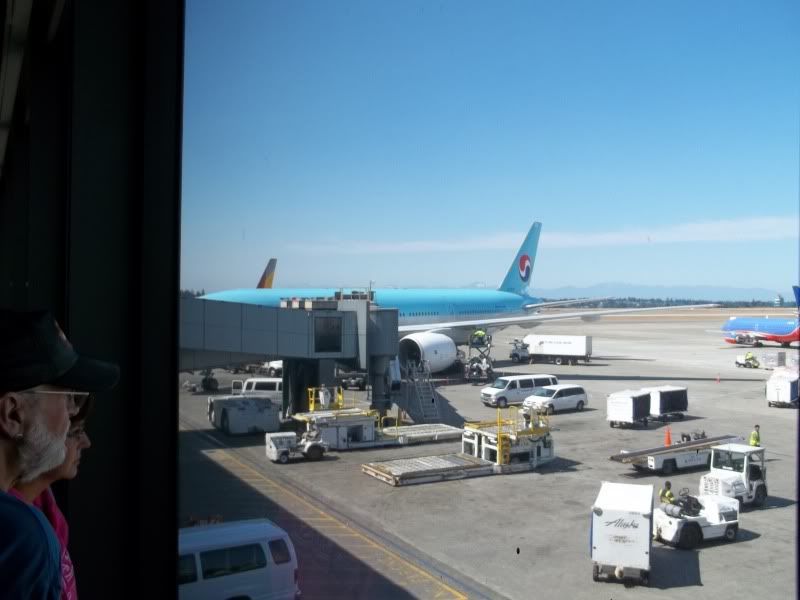
The plane I flew on to Korea, picture taken at SEATAC airport in Seattle.


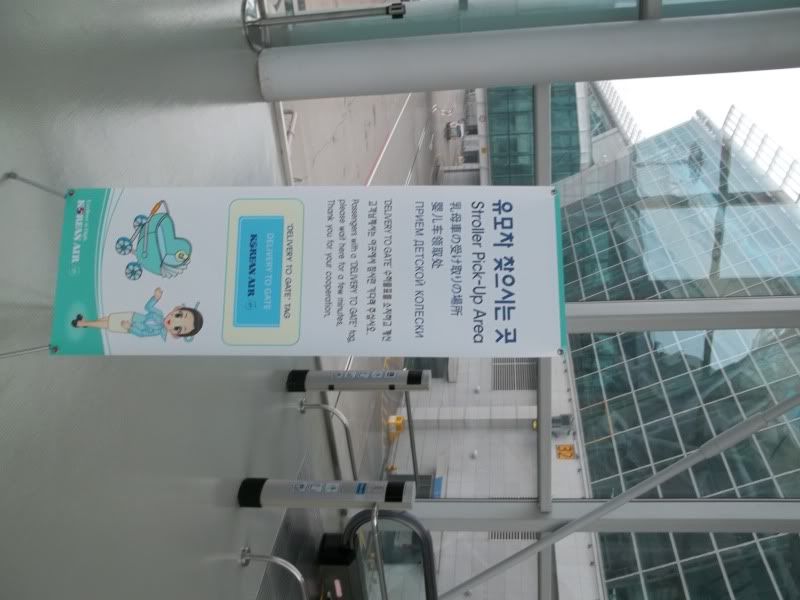
A reminder that I'm now in a foreign country: the KAL stroller pickup area sign, in Hangul and English.


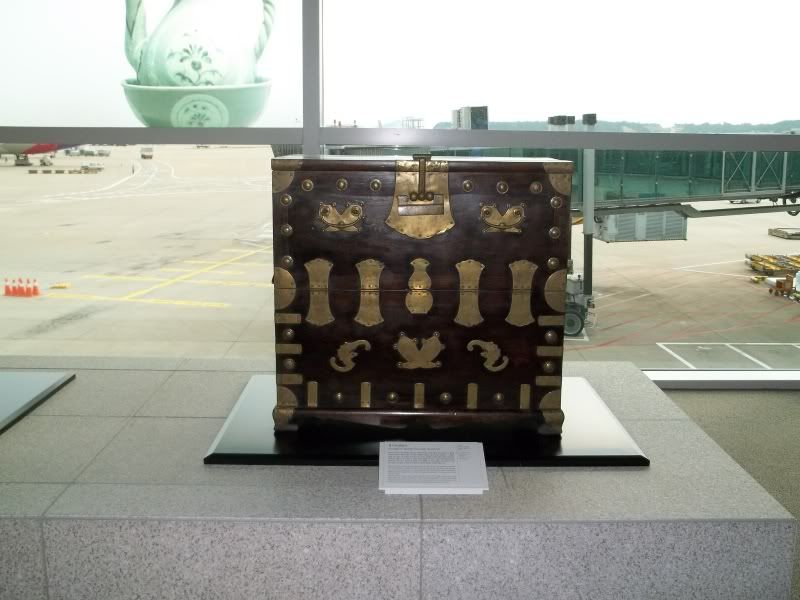
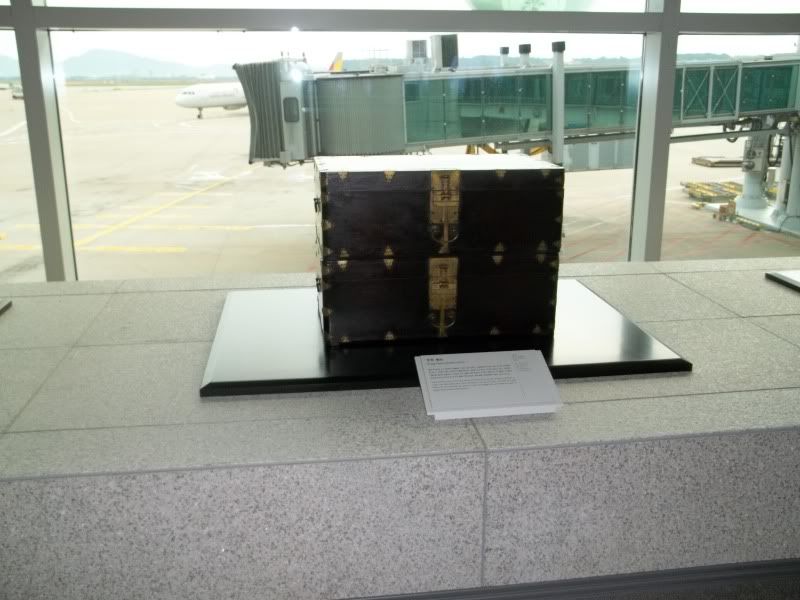
Some of the antique furniture on display on the Incheon Airport concourse.


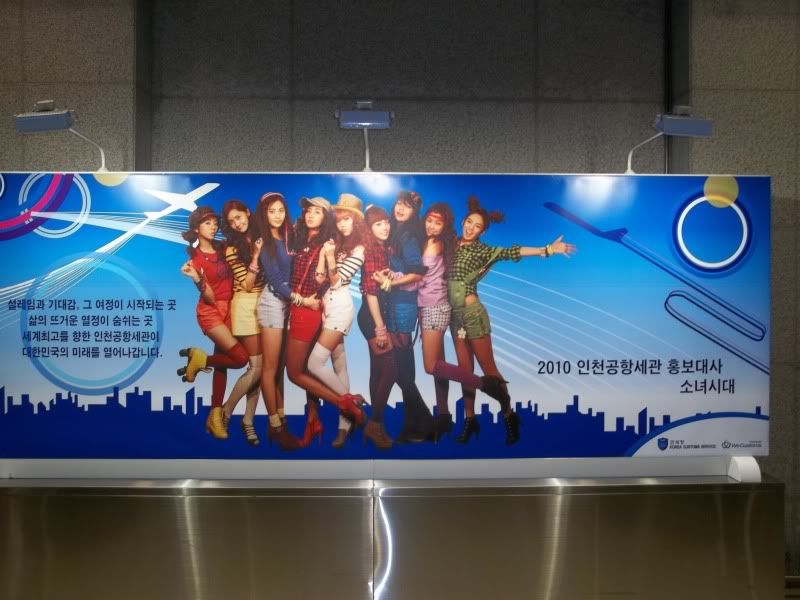
One of the ads I attempted to translate.


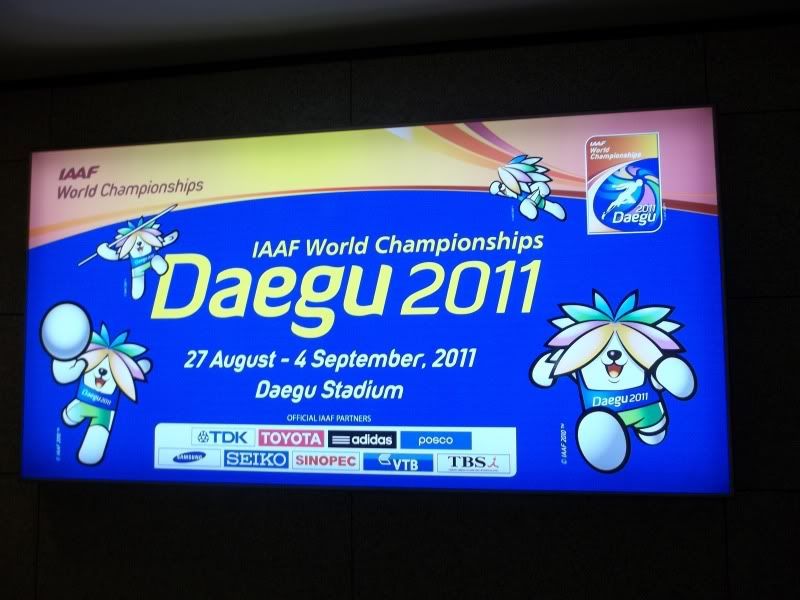
Ad for the Daegu 2011 IAAF championships in the baggage claim area.


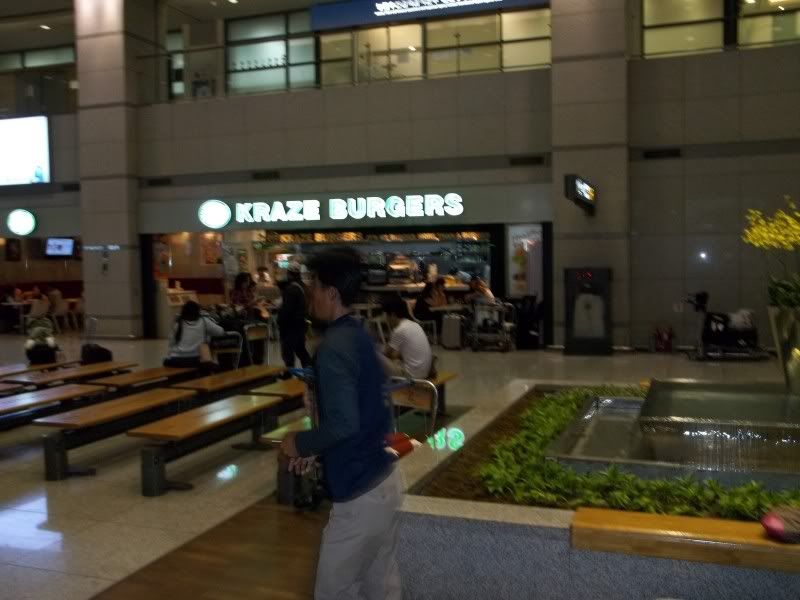
An unfamiliar fast food restaurant, one of several American-style establishments at Incheon airport.


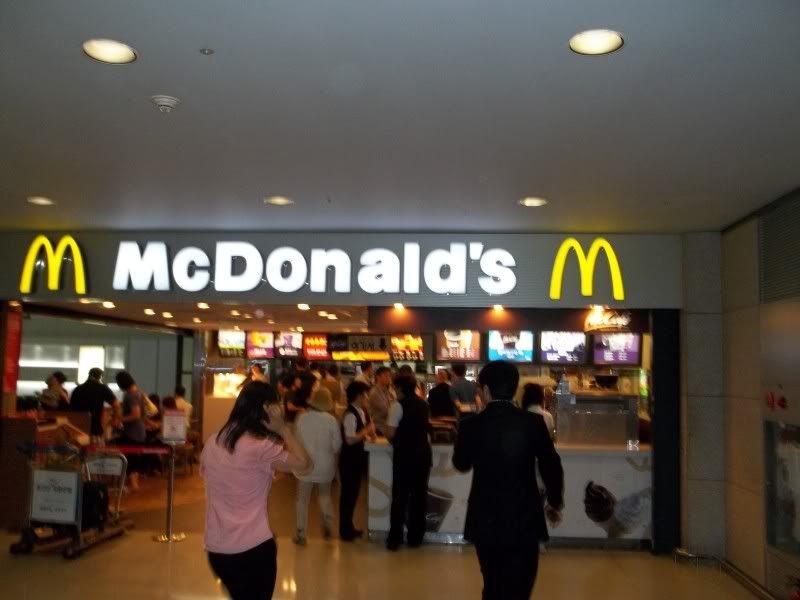
And a more familiar one.


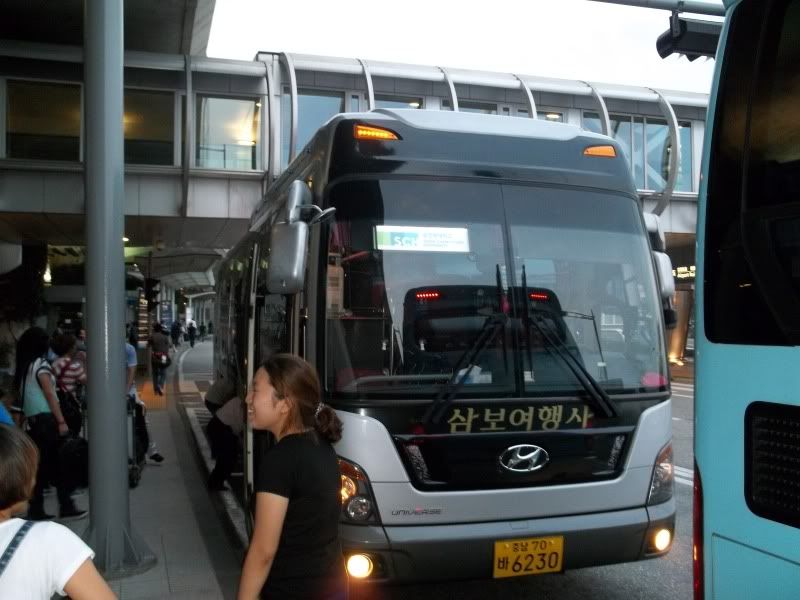
The bus that took us to Soonchunhyang University.


The Incheon Airport and Arriving in Korea

For my first real blog entry I've decided to talk a little about the experience of arriving in Korea. Since there aren't any Korean students in my dorm room yet, and classes haven't started, I thought it might be a useful point of discussion. Hopefully it will provide some insight for those planning to travel to or study abaroad in Korea. Later I'll likely be able to discuss more culturally-tied topics.

While I can't speak for other airlines operating flights to Korea, the experience on Korean Air was excellent. Despite being in economy class, in flight entertainment was provided free of charge and allowed for viewing of a large number of recent movies, as well as a few episodes of television programs. This is quite a bit different to the last flight I'd made previous, a domestic US flight where such options cost the passenger about $6. Also of note was that the two in-flight meals offered an option of western or Korean food. I highly reccommend the Korean options - mine were bibimpap for lunch and beef with rice for dinner, both of which were surprisingly tasty. For a more authentic taste I followed the example of the Koreans seated next to me and made extensive use of the red chilli paste provided with the meals. While at first uncertain how it would come out, the result was better taste though spicy as would be expected.

Most people flying to Korea will end up with Incheon Airport as their destination. It didn't take long for it to hit me that I'd actually arrived in Korea once I stepped off the plane. Just outside the aircraft was a sign for the stroller pick-up area, with full hangul (the Korean alphabet) writing taking precedent over the English. Airport PA announcements were also first in Korean, but then also provided in English and Mandarin. Navigating the airport is a simple affair thanks to plenty of signs that are all in both Korean and English.

Along the way I was surprised to find a small display of antique Korean furniture in the councourse near my arrival gate. Most of the pieces dated from the 19th century. I was taken at the craftsmanship of the pieces, and how they were displayed. There was no glass protecting them from passers-by, though perhaps there was an electronic alarm system. Such a display in the U.S. likely would have been in a protective case.

Just as navigating the airport, claiming baggage is easy to do at Incheon. Despite a large claim area, it's simple to find yours thanks to electronic signs that again proclaim the information in Korean, then English and finally Mandarin. I also noted a number of advertisements around the baggage claim area, and tested my ability in Korean by trying to read them. It's safe to say I've got much more studying ahead if I want to understand them fully. One that did stand out was for the 2011 IAAF games in Daegu - just arriving at the airport can inform you of local events, it seems.

Passing through immigration and customs was a very quick process. For the former separate gates are present for international passport holders and Korean passport holders. As long as you have your passport and papers at hand it's a quick and painless experience. Customs is even simpler if you have nothing to declare, as was the case for myself. I simply handed the customs form to a waiting attendant and headed on my way.

Another thing of note at Incheon airport is that seemingly all of the shops and restaurants I saw had signs in English. Some were more familiar names than others, of course. The location of my rendevouz with Soonchunhyang University representatives was at a McDonald's - both easily identifiable and centrally located. While it took me a while to find them (they were sitting with other foreign students), it wasn't long after that that I was aboard a bus headed for the school. While I tried to stay awake for the ride, the flight had left me tired. I managed to see the lighted skyscrapers and apartment complexes of Seoul and its surrounding area turn to green hills and farmland before I finally fell asleep. It was the sort of complexity I hope to explore further in my time here.